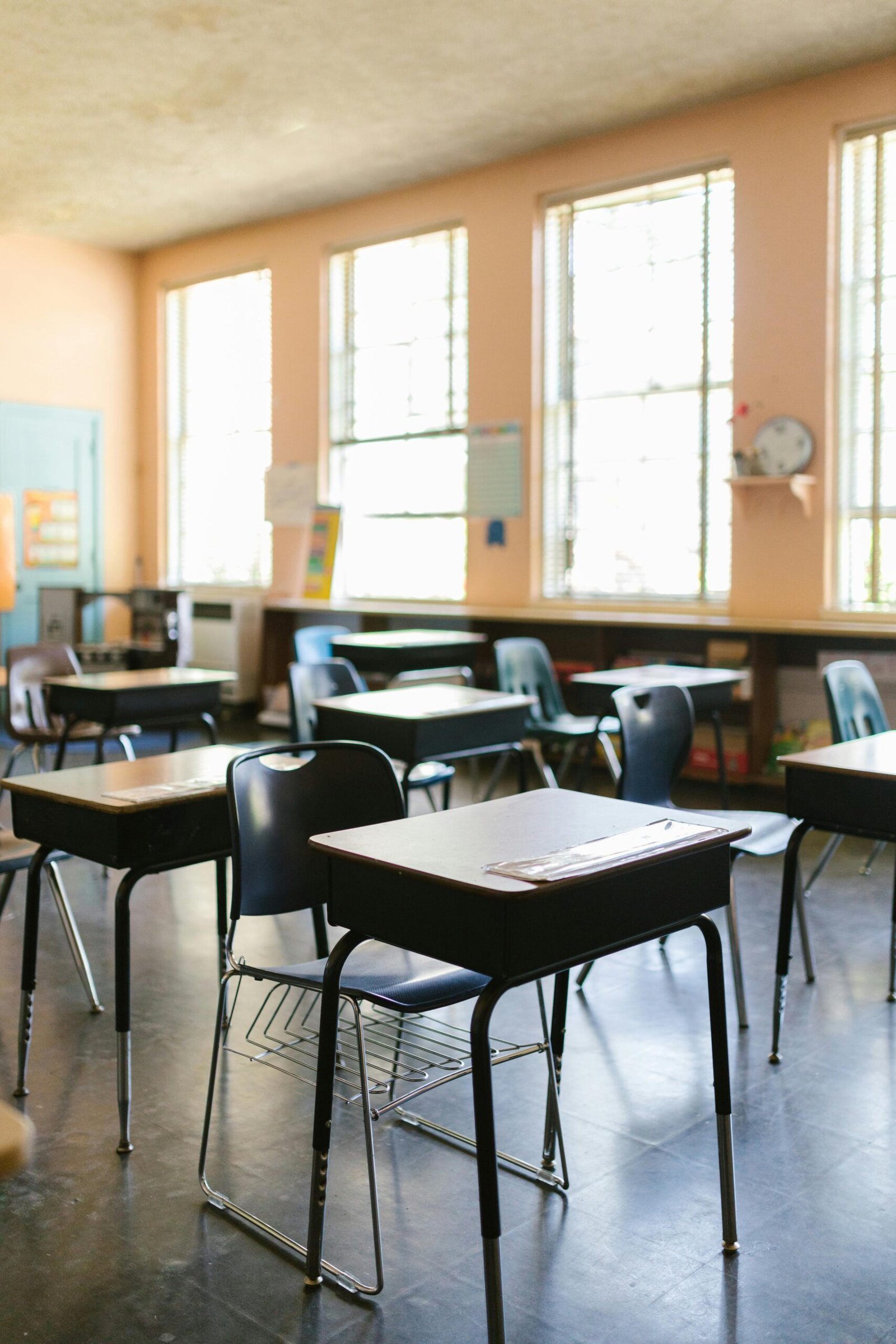
Hope in the Midst of Classroom Chaos
A new student joined one of my classes after several difficult school experiences. I knew some of the history in advance, including suspensions and conflicts. I also knew how quickly a reputation can enter a classroom before the student has had a chance to do so.
The transition was not smooth. The social balance of the room shifted, boundaries were tested, and a few students who had been doing well began making less helpful choices. At the same time, I saw small signs that the new student was beginning to feel more comfortable.
The original version of this article stopped in that unsettled middle. There was no dramatic turnaround and no neat ending. That is still the honest part worth keeping. A student is not a problem for a teacher to solve, and hope is not a substitute for a plan. When a new student arrives with significant academic, behavioral, or relational needs, teachers need ways to welcome the child, protect the learning environment, and respond consistently when things go wrong.
Start With Information, Not a Label
Records can contain useful information: interrupted enrollment, unfinished evaluations, services, behavior plans, attendance patterns, academic gaps, health needs, and strategies that previous teachers found helpful. Read what is relevant, follow your school’s privacy procedures, and ask the people responsible for the transition what you need to know.
Then separate information from prediction.
“Three suspensions last year” is information. “This student will ruin the class” is a prediction. “Struggles during unstructured transitions” is potentially actionable. “Troublemaker” is a label that tells you very little about what to teach or change.
Useful questions include:
- What has helped this student participate successfully?
- Are there situations, tasks, or transitions that have been especially difficult?
- What academic skills and interests can provide an immediate point of entry?
- Which services, accommodations, or plans are already in place?
- Who is coordinating communication with the family and support team?
Background information should improve the welcome and the support plan. It should not become a story the student has to disprove.
Prepare the Class Without Making the Student a Class Project
A class usually needs far less preparation than adults imagine. Students do not need another child’s history. They need a simple expectation: someone new is joining us, we will help them learn the routines, and we will treat them with the same dignity and boundaries we expect for everyone.
Before the student arrives, make the practical decisions:
- Choose a seat that supports instruction without feeling like surveillance or isolation.
- Prepare the materials, login information, schedule, and any basic supplies the student will need.
- Select a reliable peer to answer ordinary questions, but do not make that peer responsible for managing behavior.
- Identify the first academic task and make sure the student can enter it without already knowing everything the class did last week.
- Plan how you will explain the most important routines in a few minutes rather than delivering a long lecture.
If you can contact home, begin with curiosity and useful information instead of a warning. The site’s guide to creating a positive home-school connection includes practical ways to make that first communication clear and respectful.
Combine a Real Welcome With Clear Boundaries
Belonging and accountability are not opposites. A student can hear both “I am glad you are here” and “This is what safe participation looks like in this room.”
The CDC’s classroom-management guidance connects teacher caring and support with students’ sense of school connectedness. Its related behavior-management guidance emphasizes clear, consistent expectations and the active promotion of positive, prosocial behavior. In practice, that means relationships should make expectations more teachable, not less important.
A short private orientation can cover:
- where to find materials and help;
- what to do when entering, beginning work, changing activities, and leaving;
- two or three nonnegotiable safety and respect expectations;
- how to ask for a break or support appropriately; and
- when you will check in again.
Teach these routines as procedures, not as a test of character. The same principle applies to the whole class: effective directions should be brief, observable, and followed by a check that students understood them.
A Practical Plan for the First Two Days
- Greet the student privately if possible. Introduce yourself, pronounce the student’s name correctly, and explain what will happen first.
- Give a short tour of the class routines. Focus on what the student needs today. Save the rest for later.
- Offer a low-risk academic entry. Use a task that lets you notice current understanding without turning the first hour into a public assessment.
- Pre-correct predictable trouble spots. Before group work, lunch, dismissal, or another difficult transition, quietly remind the student what to do and where help is available.
- Notice specific success. “You opened the assignment and started after one reminder” gives more information than generic praise.
- Check in before the student leaves. Ask what made sense, what was confusing, and what would help tomorrow. End with one concrete next step.
This is not a guarantee of a calm arrival. It is a way to reduce avoidable confusion and collect better information.
When Behavior Begins to Disrupt the Class
Respond to the behavior you can observe, not to the student’s reputation or to a theory about motives. Keep the first correction calm and brief. Restate the expectation, give a reasonable way to rejoin the work, and allow a moment for the student to respond.
For example:
- Instead of: “You are trying to take over the class.”
- Describe: “You called across the room three times while another student was speaking.”
- Prompt: “Write the comment down or wait until it is your turn.”
- Follow through: Use the classroom or school response you have already explained if the disruption continues.
Do not turn every correction into a public debate. If safety is not at risk, a private conversation often gives both the teacher and student more room to recover. If safety is at risk, follow the school’s safety and crisis procedures immediately.
The Center on PBIS practice guide for educators summarizes positive, proactive ways to support and respond to students’ social, emotional, and behavioral needs. For elementary classrooms, the What Works Clearinghouse’s 2024 K–5 behavior-intervention guide recommends teaching and modeling expectations, reminding students, acknowledging expected behavior, offering instructional choices, providing frequent opportunities to respond, supporting self-monitoring, and using behavior ratings for feedback. Those recommendations are not permission to improvise a separate intervention plan when a formal plan or specialist support is required; they are a useful classroom foundation.
Look for Patterns You Can Act On
“Had a bad day” is understandable shorthand, but it is not enough for planning. Keep brief, factual notes when a pattern matters. Record:
- the task, transition, peer interaction, or adult direction that came just before the behavior;
- what the student actually said or did;
- how long or how often it occurred;
- what adults and peers did next; and
- what helped the student return to learning.
A note such as “refused to work” leaves too much unanswered. A note such as “after independent writing began, put head down for six minutes; began after teacher offered a choice of two prompts and read the first sentence together” identifies a situation, a response, and a possible support.
This information can help you distinguish among several different needs: the student may not understand the task, may be protecting themself from public failure, may lack a routine for beginning, may be seeking peer attention, or may need support beyond what the classroom teacher can provide. Do not diagnose from a behavior log. Use it to ask better questions and involve the right people.
Coordinate the Adults
A classroom teacher should not carry a complex transition alone. Identify the administrator, counselor, case manager, behavior specialist, school psychologist, social worker, or other staff member responsible for coordinating support. If an IEP, Section 504 plan, behavior plan, safety plan, or reentry plan applies, use the school’s established process rather than creating a conflicting classroom system.
A useful team conversation produces concrete answers:
- Which one or two behaviors are we addressing first?
- What will adults prompt, teach, and reinforce?
- What response will be consistent across settings?
- Who communicates with the family, and how often?
- What data will show improvement or the need for a different plan?
- When will the team review the plan?
Consistency does not mean every adult uses identical words. It means the student is not walking into a completely different set of expectations and consequences in each room.
Protect the Learning of the Rest of the Class
Compassion for one student cannot require classmates to accept harassment, unsafe behavior, or the repeated loss of instruction. Maintain the classroom expectations, respond to harm, and repair routines that have started to slip.
If several students are testing boundaries, reteach the relevant routine to everyone without making the new student the example. Tighten the transition, adjust seating or grouping, increase active participation, and make the next direction unmistakably clear. The guides to classroom management, noisy transitions, and student engagement offer practical ways to stabilize the room without relying on public blame.
Check on students who were directly affected. Do not ask peers to provide counseling, tolerate mistreatment, or keep secrets. Welcoming a classmate does not make children responsible for solving an adult-managed problem.
Measure Progress in Smaller Units
A “happy ending” is too vague to guide tomorrow’s lesson. Choose smaller signs of progress that you can observe:
- begins the first task within three minutes;
- uses the agreed signal before leaving a seat;
- completes one transition with no more than one reminder;
- returns to instruction after a correction;
- participates in a group without an insulting comment; or
- asks for help before abandoning a difficult task.
Review the pattern, not one unusually good or difficult period. Celebrate improvement without pretending the work is finished. If the plan is not helping, that is information for the team, not proof that the student is hopeless or that the teacher has failed.
Hope Should Become Something You Do
The hopeful part of this story is not that one caring teacher can rescue a child. Teachers do not control a student’s history, services, home circumstances, peer group, or every decision the student makes.
What a teacher can do is more specific: welcome without labeling, teach the routines, hold the boundary, notice the pattern, coordinate the adults, protect classmates, and make room for the student to try again.
Some days will still be difficult. Progress may be uneven. The story may remain unresolved for longer than anyone wants.
That is not a reason to abandon hope. It is a reason to give hope a structure.
